


What does a fire alarm panel do, and which parts of the system does it manage?
When choosing a fire alarm panel, start with the building's size and use, then check the panel's zone or loop capacity, EN 54 compliance and compatibility with the devices you will connect. The right panel meets today's needs and can be expanded as the building grows.
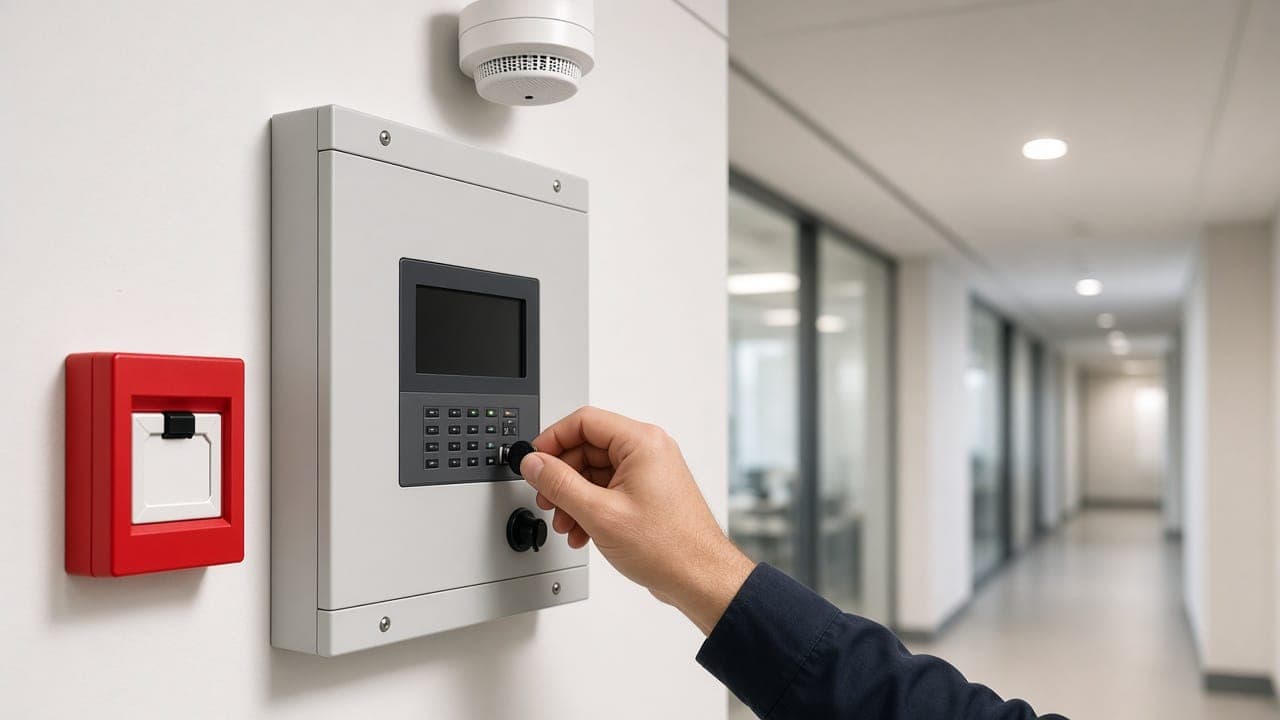
The panel is the brain of the fire detection system. It monitors signals from detectors and manual call points, activates sirens and beacons during an alarm, and records faults such as a cable break. Depending on the model and project, it can also control door holders, ventilation, elevator recall and extinguishing systems.
The distinction between addressable and conventional panels is the most basic choice. We cover it in a separate article; in short, a conventional panel shows an alarm at zone level, while an addressable panel shows it for each individual device.
Panel capacity and zone/loop count by building size and use
A zone is a part of the building defined as an alarm area. Typically each floor or fire compartment is planned as its own zone. In addressable systems, devices sit on a loop and each has its own address. Capacity is defined by how many zones or loops the panel supports; the number of devices per loop varies by manufacturer.
To size capacity, answer these questions in order:
- What is the total enclosed area and number of floors? How many fire compartments are there?
- Are there mixed uses such as warehouse, workshop, office or hotel rooms? Each may need a different detector type.
- Do hidden spaces such as ceiling voids, raised floors or underfloor areas require detectors?
- For a small single-storey workplace, a conventional panel with few zones may be enough; in multi-storey or large sites, an addressable panel is generally more suitable.
- Leaving roughly 20-30 percent spare capacity is a reasonable approach for future additions.
- If there are several buildings, ask whether panels can be networked together.
Regulations, certification (EN 54) and fire department approval
In Turkey, fire protection of buildings is governed by the Regulation on Fire Protection of Buildings. Whether a detection system is mandatory depends on building type and size. Always confirm the current text and the articles that apply to your building with the authorities or the engineer preparing the fire project.
Conformity certificates under the EN 54 series are expected for the panel and other main components. For fire alarm control panels the relevant part is EN 54-2; detectors, call points and sounders have their own parts. Ask the vendor in writing for the certificate number and scope.
The fire department process generally involves project approval and an inspection when the building is complete. Using products that deviate from the project or lack certificates can cause problems at the occupancy and licensing stage. Selecting products during the design phase is far cheaper than replacing them later.
Compatibility with detectors, call points, sirens and extinguishing systems
The panel and devices must speak the same protocol. In addressable systems each manufacturer uses its own communication protocol, so connecting another brand's detectors to a panel is often not possible. That means a degree of brand lock-in; ask about spare parts and local technical support from the start.
For the devices you will connect, check:
- Detector types: smoke, heat, multi-sensor, flame and linear detectors; the right type in kitchens, warehouses and dusty areas reduces false alarms.
- Compatibility of manual call points and sounders with the panel's output capacity and the current calculation.
- For extinguishing systems (for example gas suppression in a server room), whether the panel has the required control output and feedback input.
- Relay or interface modules for integration with door holders, ventilation, elevators and other building systems.
- Backup battery capacity, so the system runs for the duration required by regulation and project during a power cut.
Installation, commissioning and periodic maintenance costs
Total cost is not just the panel price. Cabling, device count, labor, commissioning and testing, design drawings and documentation are often as significant as the equipment itself. When comparing quotes, ask for line items; looking only at the total is misleading.
After installation, a commissioning test should be run, each detector and call point tried individually, and results recorded in a report. Periodic maintenance follows: detector cleaning and testing, battery checks and review of fault logs. Frequency varies by building type and applicable rules; an annual maintenance contract is generally preferred.
Batteries have a limited life and need replacing at intervals, so include that in the maintenance budget. Dirty detectors are also the most common cause of false alarms; protect them during construction or renovation.
Checklist for choosing a panel
Complete the items below before requesting quotes. This list lets you compare different offers on the same basis.
- Are building type, floors, total area and use areas documented?
- Have the fire project and fire department requirements been confirmed?
- Does the panel hold an EN 54-2 certificate, and did you get the number in writing?
- Are detectors, call points and sounders also EN 54 certified?
- Does zone or loop capacity leave spare room beyond current needs?
- Have you decided between addressable and conventional, and written down why?
- Were detector types chosen for each area's risk?
- Are integrations such as extinguishing, ventilation and door holders planned?
- Has battery runtime and power been calculated?
- Do quotes include commissioning tests, a report and user training?
- Are the scope, frequency and response time of the maintenance contract clear?
- Are local technical support and spare part availability verified?
Working with fountr on fire safety
A fire detection project requires considering building type, regulation and device compatibility together. As fountr, based in Sakarya, we support businesses with fire alarm panel selection, installation and maintenance as part of our security services. If you want a needs analysis and quote comparison for your building, write to us at [email protected].
Frequently asked questions
Below are common questions about choosing a fire alarm panel, with short answers.
- Is an addressable panel mandatory for a small workplace? No. In small single-storey spaces a conventional panel with few zones may be enough, but confirm regulation and project requirements first.
- How is the number of zones determined? It is generally planned by floor, fire compartment and use area; the engineer preparing the fire project sets the zone layout.
- Why does the EN 54 certificate matter? It shows the product has passed standard tests and is usually requested in fire department approval and licensing processes.
- Can detectors from another brand be used with the panel? Mostly not in addressable systems, as protocols are manufacturer-specific. Get compatibility confirmed in writing before buying.
- How often should maintenance be done? It varies by building type and regulation; at least one periodic maintenance and test per year is generally planned.