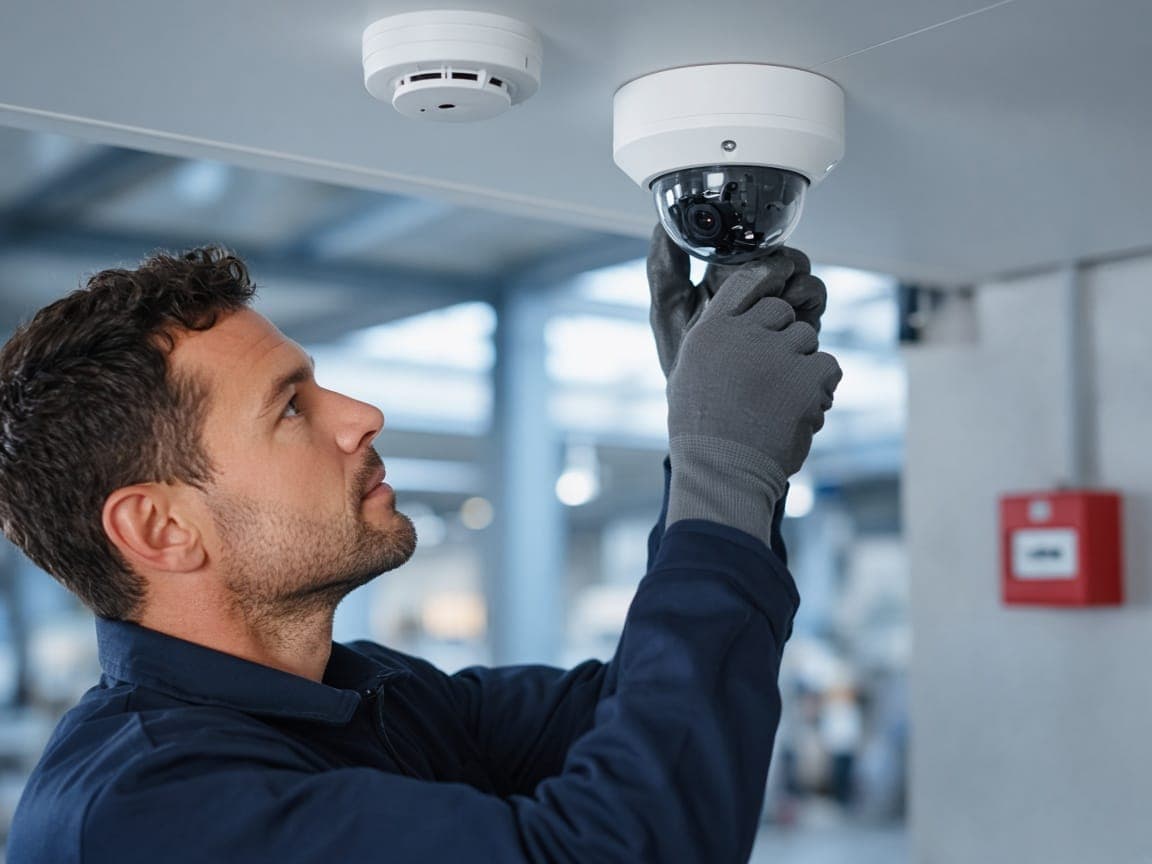



What is a gas detection panel and how does it differ from a fire panel?
A gas detection panel is a control unit that continuously monitors signals from gas detectors, sounds audible and visual alarms when a set level is exceeded and, if needed, closes a solenoid valve or starts ventilation. In an addressable gas detection panel each detector has its own address, so the panel tells you exactly where the leak is.
A fire panel monitors fire indicators such as smoke, heat and flame. A gas panel measures the concentration of flammable or toxic gases. The logic is similar, but detector types, alarm thresholds and the actions they trigger differ. A fire panel does not manage gas sensors properly on its own, so a separate gas panel or gas module is used.
A gas leak comes before a fire. Early warning is the most critical step in reducing explosion and poisoning risk. That is why businesses with boiler rooms, kitchens, car parks, generator rooms or production areas should plan gas detection as a separate system.
Addressable vs conventional gas detection systems
In a conventional system, detectors are wired to zones and the panel only shows which zone is in alarm. In an addressable system, detectors communicate on the same loop and the panel sees each one by name. We covered the similar distinction for fire in a separate article: Fire detection systems: addressable vs conventional panels.
The comparison below summarizes the points most often used when deciding:
- Location information: Conventional shows the zone; addressable shows the individual detector.
- Cabling: Addressable usually needs less cable thanks to the loop; in conventional systems cabling grows with the number of zones.
- Fault tracking: An addressable panel can show which detector has a break, contamination or sensor-life issue.
- Cost: For small single-room setups conventional is usually cheaper; in multi-point facilities addressable can win on total cost.
- Expansion: Adding a detector to a loop is usually easier, but depends on the panel's address capacity.
- Integration: Addressable panels are generally better suited to building automation or central monitoring.
Which gases need detectors: natural gas, LPG, CO and industrial gases
Detector choice depends on the gas, because each gas requires a different sensor technology and mounting height.
Natural gas (methane) is lighter than air, so detectors are usually placed near the ceiling. LPG is heavier than air and settles on the floor; detectors go close to floor level. Carbon monoxide (CO) is colorless and odorless and matters in boiler rooms, garages and enclosed spaces; follow the manufacturer's instructions for mounting height. Oxygen depletion, ammonia, hydrogen or refrigerant gases need dedicated sensors.
Flammable gases generally use catalytic or infrared sensors, while toxic gases use electrochemical sensors. Electrochemical sensors have a limited life and need replacing at intervals. Always ask about sensor life and calibration interval before buying.
Selection criteria by building type: zones, cabling, solenoid valve integration
First list how many points carry gas risk. A restaurant kitchen, a boiler room and a car park are three separate risk areas. A small business may need only 1-2 detectors, while a multi-storey building or factory may have dozens. Choose panel capacity for needs a few years ahead, not just today.
- Zone and address capacity: Leave room for future expansion.
- Cabling: In older buildings, an addressable loop is easier if existing cable routes can be reused. Hazardous areas need suitable cable and barriers.
- Solenoid valve output: The panel needs a valve shutoff relay. Valve voltage and normally open/closed type must match the panel.
- Ventilation and external devices: Plan fan activation, sirens and strobes on alarm.
- Backup power: Check how long the panel runs on battery during an outage.
- Environment: Humidity, dust, temperature and explosive-atmosphere class determine the detector protection rating.
- Remote monitoring: Decide in advance who receives alarms outside working hours.
Regulation, installation and periodic maintenance checklist
Requirements for gas systems vary by building type, gas used and local authorities. Confirm current requirements from the gas distribution company, the fire department and relevant TS EN standards with a qualified firm and the authorities before starting. The list below is a general framework, not a substitute for regulation.
- Is there a layout showing risk areas and detector positions?
- Are detectors at a height suited to the gas type and away from ventilation airflow?
- Are products certified to relevant standards?
- Was solenoid valve shutoff tested with a real scenario after installation?
- Are pre-alarm and main alarm thresholds defined in writing?
- Are calibration and function tests done at least at the manufacturer's recommended interval? Generally at least once a year.
- Are sensor replacement dates recorded?
- Does staff know what to do when an alarm sounds? Is a short procedure posted?
- Are maintenance records and test reports archived?
What does it take to manage gas and fire systems from one center?
To monitor gas and fire panels on a single screen, the panels need a shared communication protocol or voltage-free relay outputs. A monitoring software then collects alarms, faults and valve status on one dashboard, so a security officer or facility manager sees at a glance which building and which point has a problem.
During planning, pay attention to: panels being able to communicate, a secure and uninterrupted network, alarm notifications by phone or e-mail, and event log storage. For fire panel selection, see our article How to choose a fire panel.
Fountr plans such integrations on the IT infrastructure and software side and can help set up a monitoring dashboard fitted to your business. To assess whether your existing systems can be combined, write to [email protected].
Frequently asked questions
- Can a gas detection panel replace a fire panel? No. Detector types and alarm logic differ; the two should be planned separately or with compatible modules.
- Is an addressable system necessary for a small business? No. For simple one- or two-point setups a conventional system may be enough. Addressable makes sense as point count and expansion plans grow.
- How often should detectors be calibrated? Generally at least once a year according to the manufacturer's instructions; sensor type and conditions can shorten this.
- Does the valve close automatically when gas is detected? Yes, if the panel has a valve output and a solenoid valve is connected. The shutoff scenario must be tested after installation.
- Can gas and fire systems be monitored on one screen? If the panels have suitable communication or relay outputs, a monitoring software can bring them onto one dashboard.