



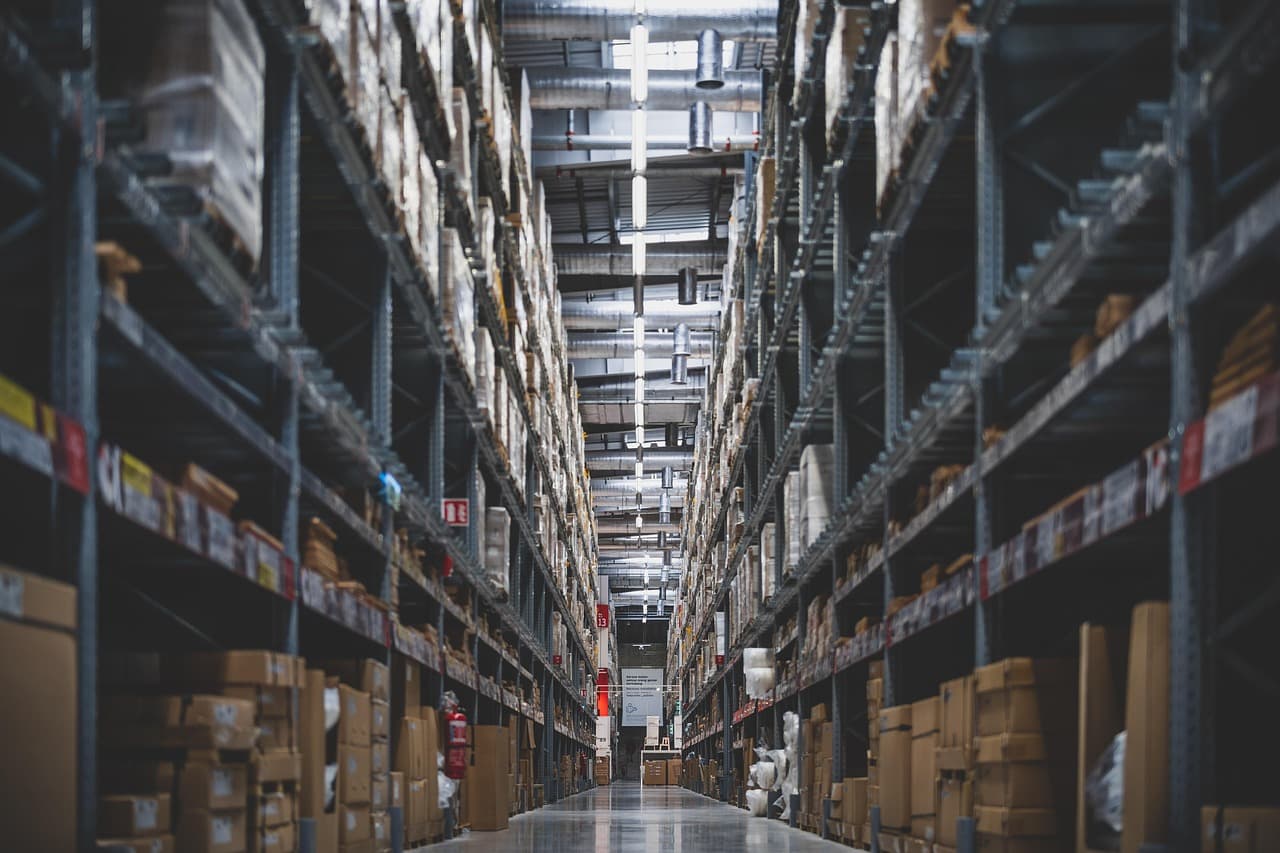
Comparing single, batch, zone and wave picking
The four methods work on different logic. This summary shows where each one stands out.
- Single (discrete) picking: One picker collects one order from start to finish. It is the simplest to set up and errors are easy to trace. Walking distance grows as order counts rise.
- Batch picking: Items for several orders are collected in one trip, then sorted into orders. It reduces walking for many small, few-line orders. The sorting step adds extra work and error risk.
- Zone picking: The warehouse is divided into zones and each picker works only in their own zone. It suits large warehouses with wide product ranges. Consolidating orders across zones needs coordination.
- Wave picking: Orders are grouped by time windows, such as carrier cut-off times, and released in waves. It balances workload when carrier pickup times are fixed. It requires planning and software support.
Which method fits your order volume and product variety?
Two variables matter most: daily order volume and lines per order. SKU count and warehouse size also play a part.
For a small warehouse with few daily orders, single picking is often enough. Building a complex method can add more management overhead than it saves.
If order counts are high and each order has only a few lines (typical in e-commerce), batch picking makes sense. If the warehouse is large, SKU count is high and several people pick at once, zone picking reduces aisle congestion. If carriers collect at set times, wave picking lets you plan around dispatch times.
Hybrid setups are common, such as batching within zones. Measure the current situation first, then test one change and compare the results.
Reducing picking errors with barcodes, handheld terminals and OMS
Paper pick lists are prone to misreading and item mix-ups. Barcode verification warns the picker instantly when the wrong item or location is scanned, so errors are caught before reaching the customer. See our barcode transition guide for the steps.
A handheld terminal shows the pick list on the device, updates stock in real time and removes paper flow. If shelf locations are defined, the system can suggest a pick sequence along the shortest route, reducing walking time.
An order management system (OMS) gathers orders from different channels in one place and turns them into pick orders by priority and carrier time. Batch or wave grouping then follows rules instead of manual effort. Our article on OMS, ERP and WMS explains how their roles differ.
Metrics to track for picking efficiency
You cannot improve what you do not measure. Even a small business needs only a few core indicators.
- Lines picked per hour: Productivity per picker.
- Picking accuracy: Share of orders picked without errors.
- Order cycle time: Time from receiving an order to it being ready to ship.
- Return and wrong-shipment rate: The part of errors that reaches the customer.
- On-time dispatch rate: Orders that meet the carrier cut-off.
- Inventory accuracy: Match between system quantity and shelf quantity.
Off-the-shelf software or a custom picking module?
For a business with standard flows, a single warehouse and classic picking, off-the-shelf warehouse software is usually sufficient and quick to adopt. When special requirements arise, such as custom location logic, channel-based priority rules or ERP and marketplace integrations, packaged products can struggle.
When deciding, consider integration with your existing ERP, multiple sales channels, the need to combine methods and your growth plans. Our article on custom software versus off-the-shelf packages offers a broader framework.
At Fountr, we review a business's current warehouse, barcode and OMS flow and give a realistic recommendation between a ready solution and a custom picking module. If you would like to review your warehouse processes together, you can write to [email protected].
Frequently asked questions
The most common questions about order picking:
- What are the order picking methods? The main ones are single, batch, zone and wave picking; many warehouses use them in combination.
- Which method suits a small warehouse? If order volume is low, single picking is generally enough; consider batch or zone as volume and line counts grow.
- What is the downside of batch picking? Sorting collected items into orders adds work and error risk, which is why barcode verification matters.
- Do barcode systems really reduce picking errors? Yes, because they warn immediately when a wrong item or location is scanned, errors are usually caught before shipping.
- Which metric should I start with? Picking accuracy and lines picked per hour are a good start, then add order cycle time.