



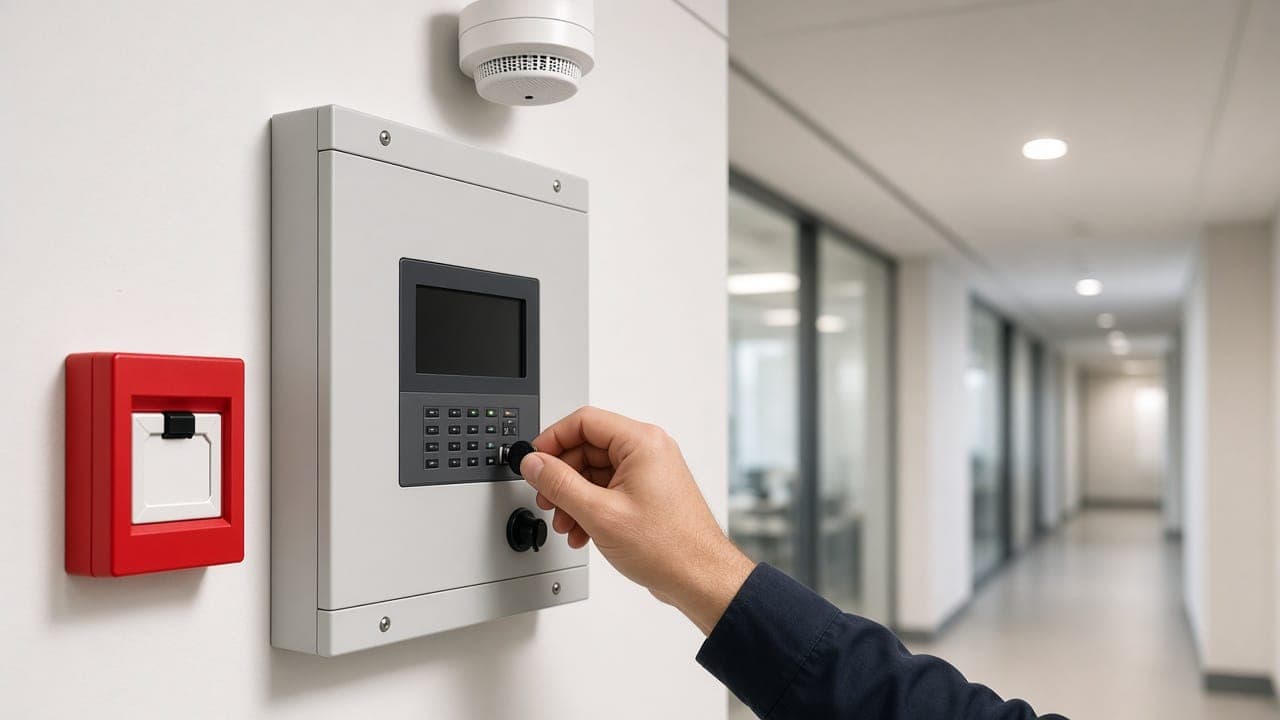
Addressable or conventional?
A conventional panel can be enough for small, simple layouts. In multi-storey, large or growing buildings an addressable system pays off over time, because it shows exactly where an alarm or fault is and shortens maintenance. We compare the two in our article on addressable versus conventional panels, and our fire alarm panel checklist helps with choosing a panel.
From survey to maintenance
Every project starts with the building itself; a device list drawn up at a desk usually changes on site.
- Survey: building type, use, existing wiring and regulatory requirements are reviewed on site
- Design: detector types, call points, sirens and modules, plus the loop/zone plan
- Quote: device list, labour and maintenance terms in writing
- Installation and commissioning: cabling, device mounting, panel programming
- Scenario tests: alarm, fault and control outputs are tested one by one
- Handover and maintenance: user training, test records and a periodic maintenance plan
Which buildings?
We install systems in factories and warehouses, office buildings, shops, hotels, schools and multi-storey commercial buildings. Planned together with gas detection, CCTV and intruder alarms, the whole safety infrastructure can be managed by one team.